

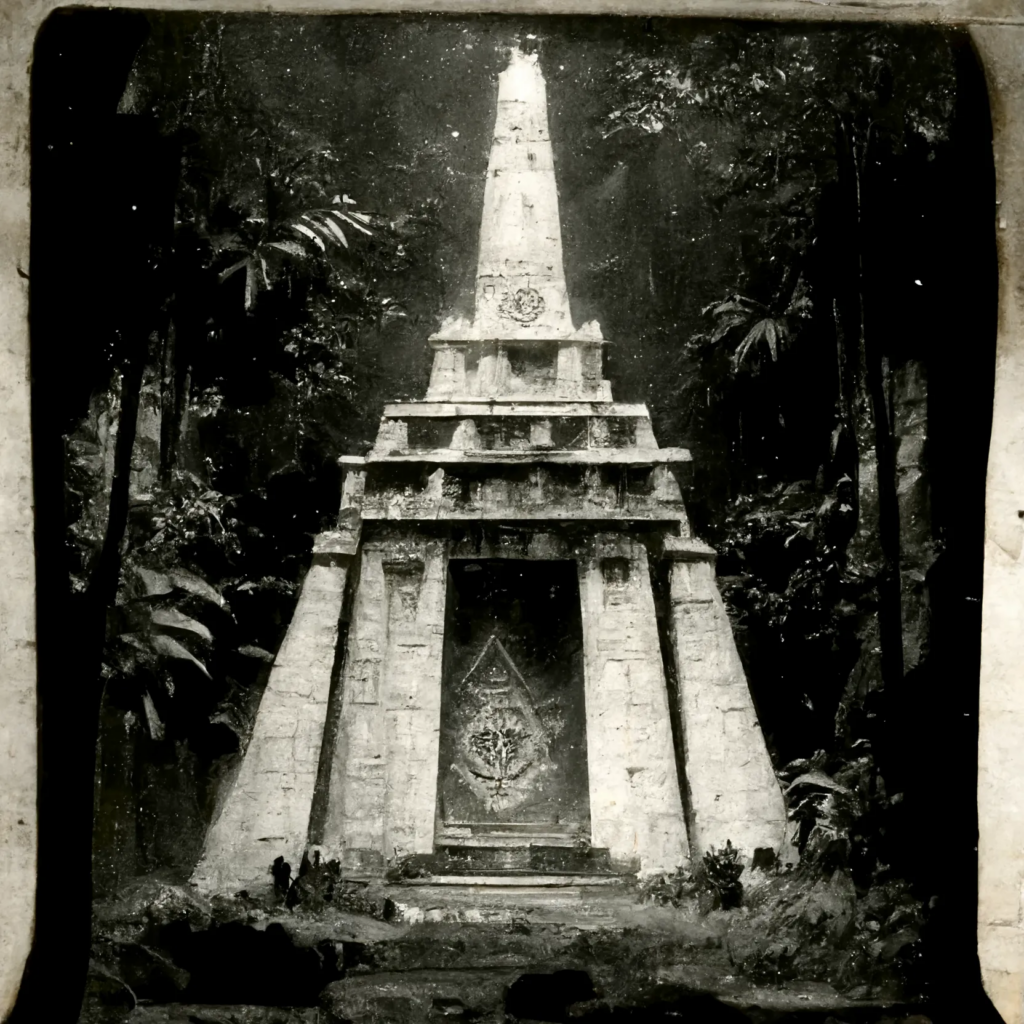
Pabellón de Melancólicos
Pavilion of Melancholics is a hypermedia installation conceived as a path of departure and return oriented toward the search for forms of knowledge linked to the Occult. It proposes a journey in which the viewer advances through a dark space until entering a corridor with screens arranged as triptychs, where they begin to engage with a series of symbols and images (elements that stand out from an amalgam of contents assembled through abrupt and confusing montage) while an ambient sound envelops them. They then proceed toward a kind of cabin aligned with the corridor. Once inside, the viewer shifts from receiving stimuli to activating them through devices that function as tokens and elements of a board game. Finally, in a reverse journey, the spectator who entered stripped of all knowledge about the Occult retraces their steps toward the point of departure, like someone traveling between planes of existence or returning from madness.
The work is articulated through the notion of “dismantling”, understood as a process of extracting concrete elements with the purpose of isolating symbols, gestures, and contents that later allow the generation of new configurations and meanings. It is constructed through the appropriation and re-signification of fragments drawn from other works, among them The Nature of Elohim, a film reverie by Rafael Ramírez and Depositional Landscape, a hypermedia work by Oderay Ponce de León, as well as sound elements and other devices created specifically for the piece. Together, these components create an interactive and immersive journey that stimulates the viewer and turns them into an operative subject within the proposed ecosystem.
Dismantling is assumed not only as a preliminary methodology but as a structural principle. The installation is configured through modules that can function with a certain autonomy and that, in isolation, may be considered independent works, thereby questioning principles such as formal stability and authorship.
At the same time, Pavilion of Melancholics also functions as a laboratory: both its research process and its exhibition format stimulate the emergence of new works connected to it. The piece lacks fixed boundaries, a definitive beginning or ending; it remains open to organic transformation and adaptation. Although it possesses a recognizable structure, it deliberately presents itself as an open process in constant becoming, closer to an ecosystem than to a finished object.
From a conceptual standpoint, it is situated within a landscape of interfiction (term grounded in the Ethno☰Hauntology Manifesto) not only because of its derivation from a cinematic practice that engages this notion, but also because it operates as a portal between contexts that are profoundly Ethno☰hauntological. In this sense, both the work and its curatorial dispositif introduce an ontological suspension that causes the viewer to oscillate between belief (also understood as faith) and critical analysis.
Consequently, the installation may be understood simultaneously as a channel, an archive of memory, or an augural dispositif: a threshold where specters resonate and distant phenomena find concordance, thereby disrupting the linearity of space-time in order to measure “socio-historical reality” through alternative instruments.
KAMPOS
Stratis Vogiatzis
2021 | Photography, Text
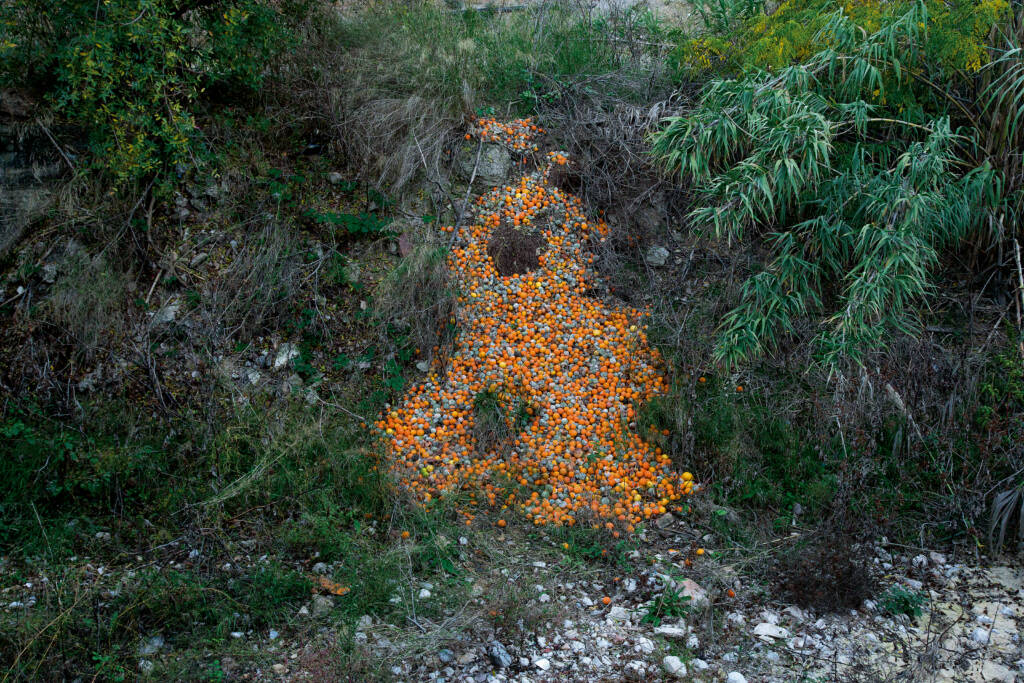
The work reflects on Kampos in Chios as a place where past and present coexist in constant tension. Through years of wandering and encounters with its inhabitants, the past emerges not as a static trace but as an active force that permeates space, memory, and everyday life. The narrative focuses on ephemeral traces, fragments of memory, and subtle connections that blur the boundaries between the real and the imaginary, transforming the place into an enigmatic field of personal and collective memory.
KLEIZAME
Sol Prado
2019 | Digital video | 21’ 38’’
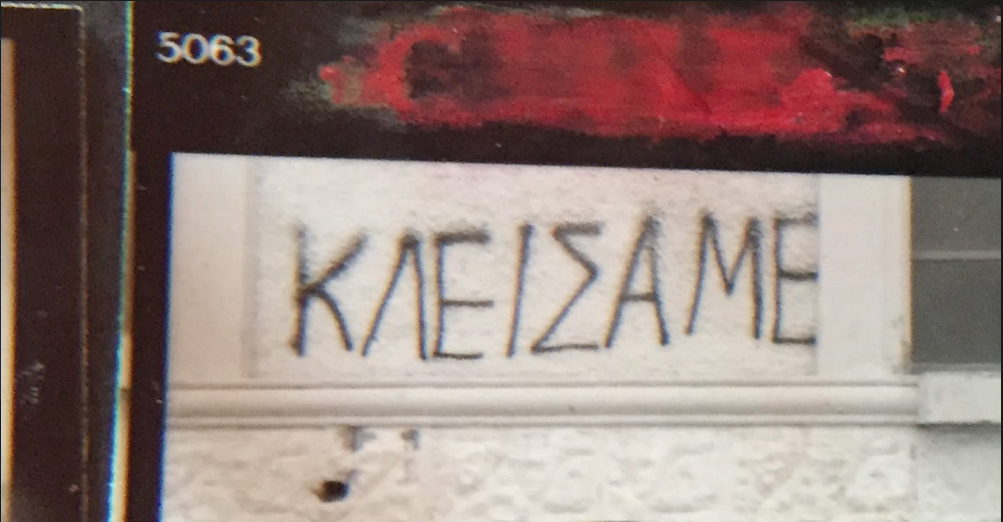
KLEIZAME examines Leros as a site of confinement, exile, psychiatric care, and a refugee camp. Drawing from the diary of Félix Guattari, the work connects architecture, the body, and power, exploring how the production of desire and audiovisual stimuli operate as contemporary mechanisms of social regulation and controlled sedation.
A Bird in Search of a Cage
Menelaos Karamaghiolis & Døcumatism
2012-2019 | Digital video | 11’ 26’’
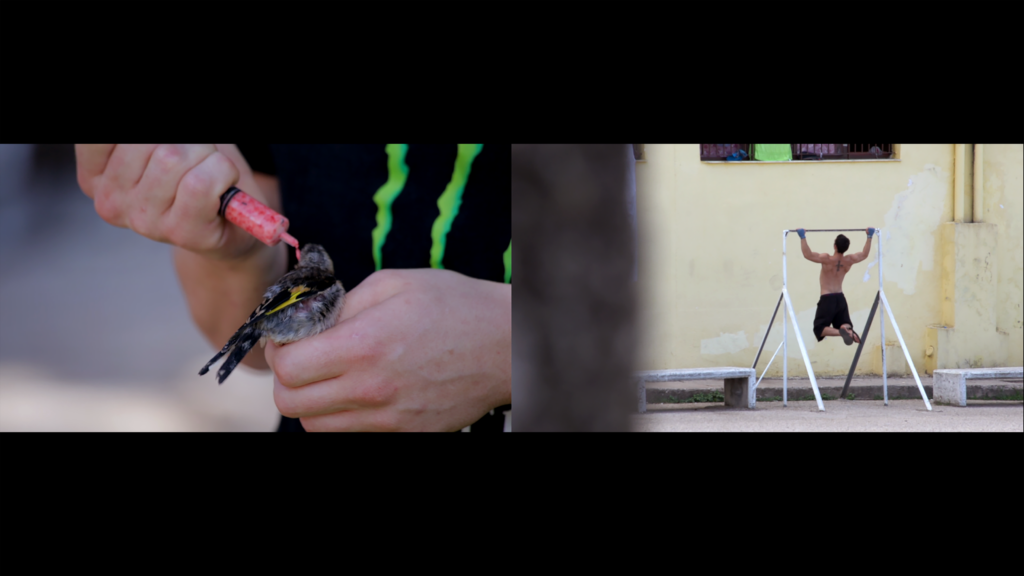
In his cell, a juvenile prisoner raises a bird that flies free outside its cage and becomes his best “friend” and a symbol of freedom inside prison. Little by little, the prisoner becomes a kind of “prison guard” when he realizes that the sexual awakening may upset the bird and fly away.
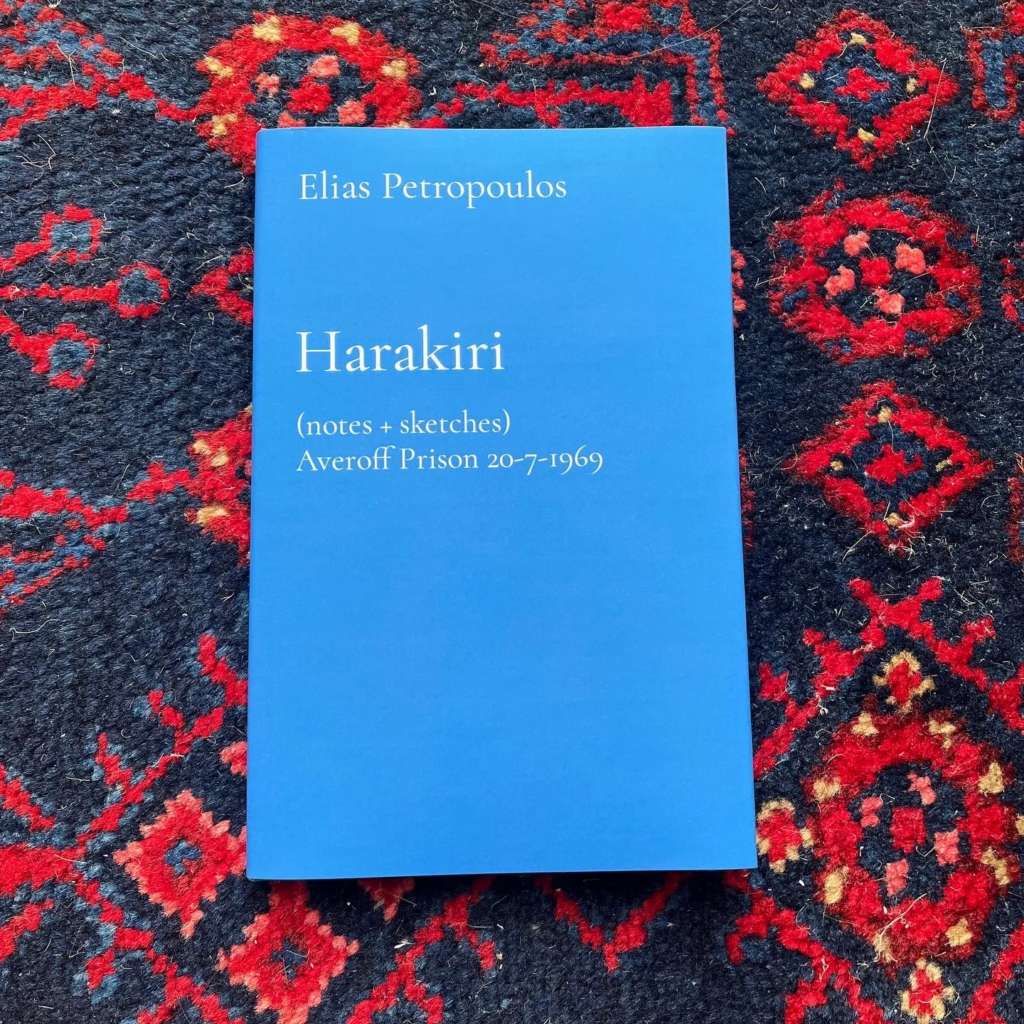
Harakiri
Cycladic Press
Elias Petropoulos edited and translated by Michael Alexandratos | 2024
“Harakiri” presents the notes and sketches made by Elias Petropoulos while he was incarcerated in Averoff prison in July 1969.
Thirty years later, Petropoulos published an article based on this material, which detailed the practices of self-harm amongst prisoners and urban working class men, dubbed “harakiri” in Greek underworld slang.
Translated into English for the first time, this article is accompanied by full-colour facsimiles of Petropoulos’s sketches, which were sourced from his personal papers archived by the Gennadius Library in Athens.
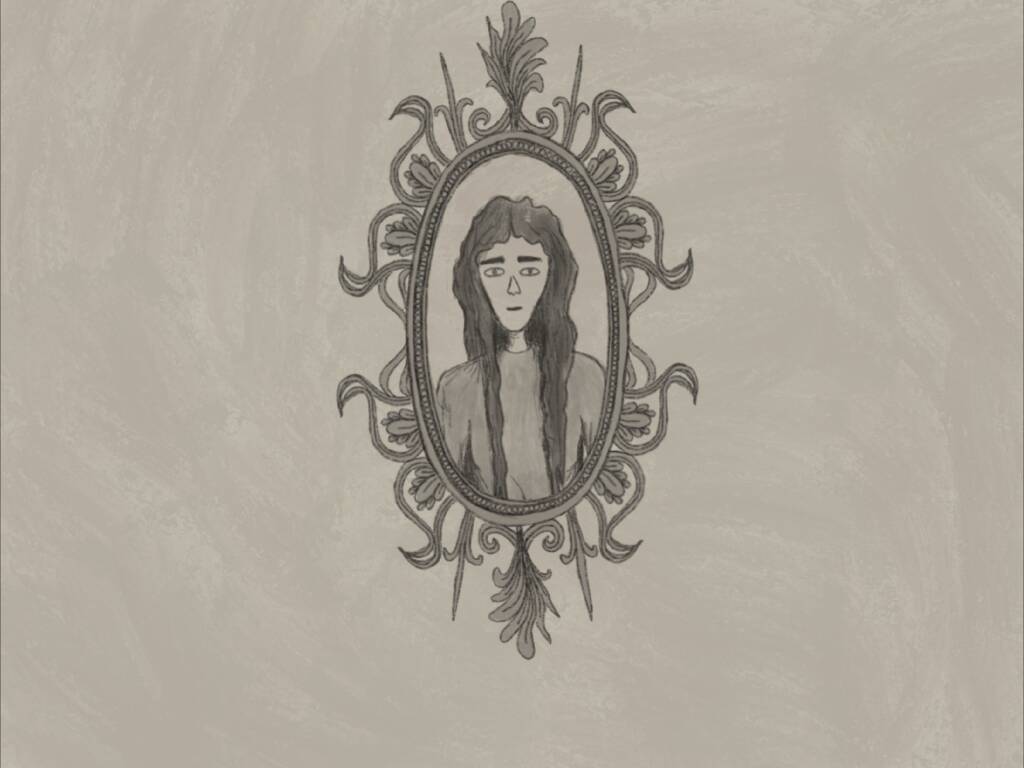
Body / Gesture / Territory
Aliki Finn & Cognitive Noise
2025 | 2D animation | 3’ 30’’
A person stuck in a limbo trying to remember the past, trying to imagine a future that has already passed. A space that has been involuntarily silenced. Sounds that lost their purpose and became indistinct. Hazy memories. Trapped souls. 2d animation